EPIKEIA: WHEN COULD A DIOCESE CANONICALLY CONSECRATE A MAKESHIFT CHURCH, SUCH AS A PRIVATE OR MUNICIPAL STRUCTURE?
.
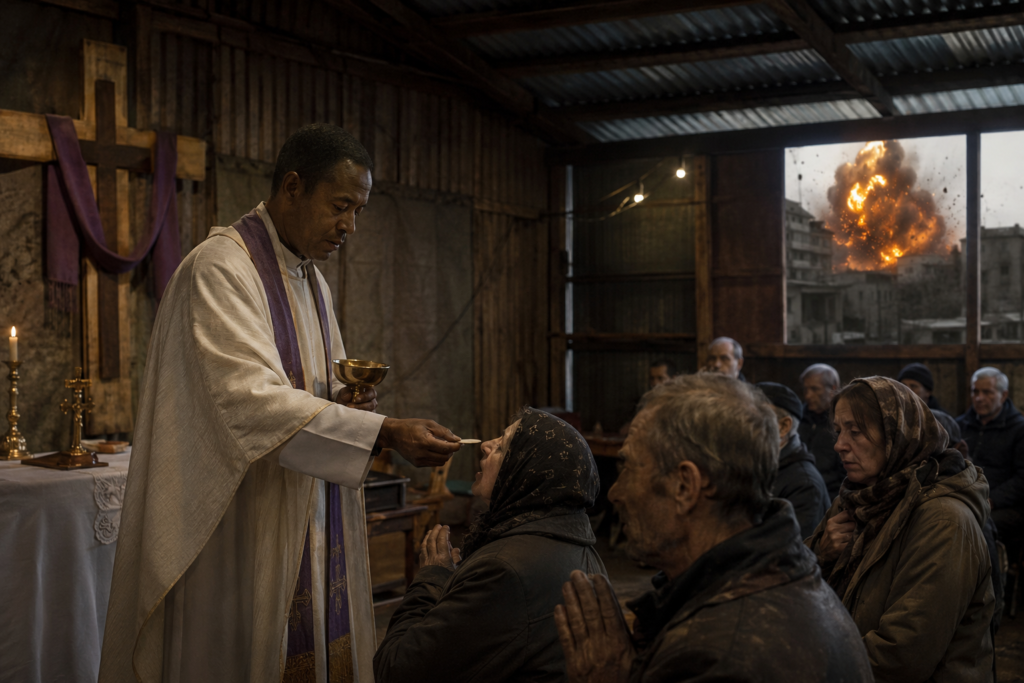
Announcing Epikeia signifies the equitable relaxation of a positive ecclesiastical law in cases of unforeseen hardship, such as a state emergency, a circumstance where strict application would thwart the law’s higher purpose. Of course, a Bishop or Priest cannot validly use a privately owned domestic or lay structure to be used as a permanent consecrated church during normal times. But during an emergency or era of civic oppression and lockdowns he indeed can, under episcopal diocesan permission.
.
The Northeast Diocese of Traditional Anglican Church of America (NE-TACA) considers the American secular war against Christianity, with all its predatory seductions and constitutional abuses, to present a kind of pseudo-Epikeia. But it is not quite enough to relax canon law.
.
Still, this is why TACA stands at the ready to hear all cases of persecution and abuse against God’s people, who hope that their worship sites may attain real church status. The conferred state of “Conditional Consecration” is always going to be the discretionary granting, as it is described on the previous page. But where does church canon stand as regards the condition of real war and catastrophe affecting the victims in a sanctified prayer space where a cleric can also be?
.
After years of relentless diminution of the image of Jesus and of Christian dominion over family and overall human condition, TACA in fact considers
that state of Epikeia to pose itself as an imminent looming condition of threat during these last days before the Wrath and Tribulation.
.
Actualizing the Claim of Epikeia for the Immediate Consecration of New Churches
.
Canonical Diocesan consecration permanently alters a building’s juridical status in perpetuum. However, during times of non-Epikeia, a property Sanctification and Dedication of a space for regular Oratory worship is usually good enough. It ably incudes Sacramental celebration by a visiting Priest or Bishop within a privately owned Diocesan-blessed structure and this gift is, in times of peace, always available, licit, valid, and very rewarding of Grace as we have learned in the discussion on the preceding page. Moreover, so is achieving a Conditional Consecration (also during non-emergency times) of one’s structure, which is appropriate if the private property, as a new Oratory operating as a real church is not mortgaged or rented nor has a lien on it and after the owner has succeeded in his following the three-month visitation, as it is described on the preceding page.
.
But What if a Structure Begs for Immediate Consecration as an Existential Consideration (Under State Emergency or Catastrophe)?
.
In the classical tradition of moral and canonical theology, the state of Epikeia (or epieikeia) is the equitable interpretation of the intent of canon law when strict literal enforcement during an unforeseen crisis would work against the higher law of charity or the salvation of souls. In lay terms, Christians who are threatened with death/catastrophe need to be granted for themselves and current location a real church, an “ad-hoc” one if possible.
.
Strictly speaking, a traditional Diocesan Priest or Bishop in normal non-emergency times could never perform this quick episcopal consecration of a building or a formal jurisdictional church consecration, because the historic formularies and canons reserve the physical consecration of a permanent sacred space to an actual church in a Diocese, rather than a privately owned structure.
.
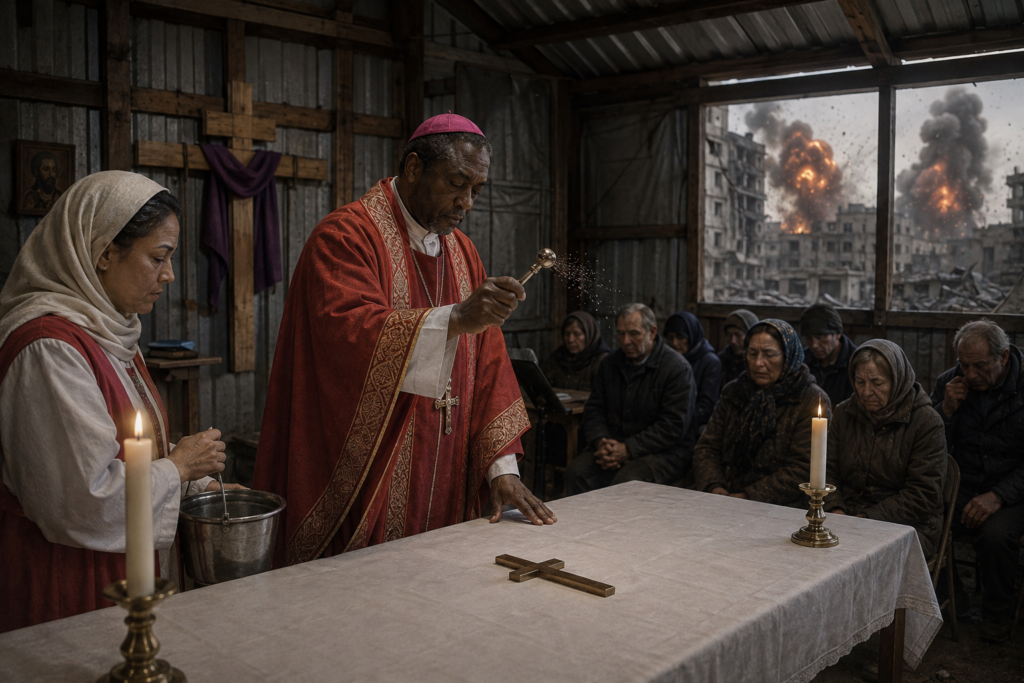
However, operating under Epikeia during a severe national crisis or period of persecution where bishops are all but inaccessible and formal structures collapse, a traditional Priest under the permission by an available Diocesan Bishop may employ specific adaptive measures. Under severe states, the Priest may act to consecrate a structure by the irresistible Grace of Charity, thus with Faith discerning to perform the act of emergency structure Consecration.
.
Actions Under Epikeia in Urgent Necessity
.
Perform a Simple Blessing (Benedictio Domus): Sometimes, rather than giving a formal structural Consecration (which legally binds a property as perpetual ecclesiastical real estate under a Bishop’s seal), the Diocesan Priest or Bishop may judge that occupancy of an interior setting during a war or other state upheaval would imminently shift too quickly to a mode of evacuation and thus would rather perform instead a distinct domestic Sanctification of the specific structure, room, or table used for the assembly, setting it apart functionally for sacred use through prayer and Scripture and allow the Consecration of Bread and Wine nonetheless to occur inside it by the Diocesan Priest or Bishop.
.
Invoke Supply of Faculty by Law (Ecclesia supplet): In a state of absolute national emergency or deadly physical isolation, the principle of Epikeia supplies the necessary pastoral faculties to gather the flock, operate an itinerant or house chapel, and celebrate the sacraments without regular administrative sign-offs from a distant or incapacitated chancery.
.
Utilize Portable Altars and Sacred Vessels: Historically and traditionally, when buildings cannot be consecrated or safely occupied, the church travels with the altar. The Priest can bless a portable altar stone or board and standard sacred vessels for the celebration of the Eucharist within the domestic space.
.
Episcopal Action (if a Bishop is Present): If a Traditional Bishop is present within the safe confines of the chosen interior, epikeia frees him from standard territorial delays, canonical waiting periods, and multi-parish coordination committees. He may immediately issue a pastoral declaration recognizing the domestic or hidden oratory as a valid mission station by virtue of imminent necessity.
.
Please consider very carefully whether your real proven church, home worship space, DIY church, private chapel, or home church would be suited by one of the four aforementioned types of the episcopal and clerical setting of it apart from the world: Formal Consecration and Chartering of a Full Church (Non-Emergency); Benediction/Sanctification and Dedication as a Blessed Structure (Non-Emergency or Emergency); Conditional Consecration of a Diocesan-Chartered Church (Non-Emergency); or, a Church Consecrated During Epikeia (Emergency).
.
And, don’t miss the opportunity to be trained and ordained as a Priest, Deacon, Appointed Deaconess or other Minister by the Northeast Diocese of TACA. Why not become the ordained Rector of your own church?
.
Please do click NEXT and see how you can talk directly to Bishop Mike DellaVecchia of NE-TACA through our Web communication form.