


A JOKER-CHURCH, LETTING POWERFUL DEMONIACS MALNOURISH AND SICKEN FAMILIES?
Never! How Can Priests More Confidently Give Ear and Voice Toward Avarice and Gluttony?
.
We have resisted the medical tyranny. Shall we be complicit through our nudging of families to walk toward new slaughter, or through our silence share in the causing of any other agonies? Are our families not addicted to fast and processed foods? To cell-phone usage?
.
“And through covetousness shall they with feigned words make merchandise of you: whose judgment now of a long time lingereth not, and their damnation slumbereth not” (1 Peter 2:3).
.
Sorry but this Church is not for sale! We will not share in the profits by persecuting those who speak up while we wait for the windfalls that would be awarded us by the world through its treats of fame, money, advanced education, or social and professional opportunity. We will not shut up.
.
“If thou forbear to deliver them that are drawn unto death, and those that are ready to be slain; If thou sayest, Behold, we knew it not; doth not he that pondereth the heart consider it? and he that keepeth thy soul, doth not he know it? and shall not he render to every man according to his works” (Proverbs 24:11-12)?
.
Shall we become a joke, a mockup of the True Church by not speaking Truth to the brethren?
.
“My people perish for lack of knowledge” (Hosea 4:6).
.
Gluttony, technology, and sloth will not lead us to our “true selves.”
.
Teach the truth of Christ and be free (John 8:32). The devil will flee our resistance (James 4:7).
.
Pastors and Deaconesses must model the spiritual fruit of temperance that resists sin (Galatians 5.:23).
.
“Be sober, be vigilant; because your adversary the devil, as a roaring lion, walketh about, seeking whom he may devour” (1 Peter 5:8).
.
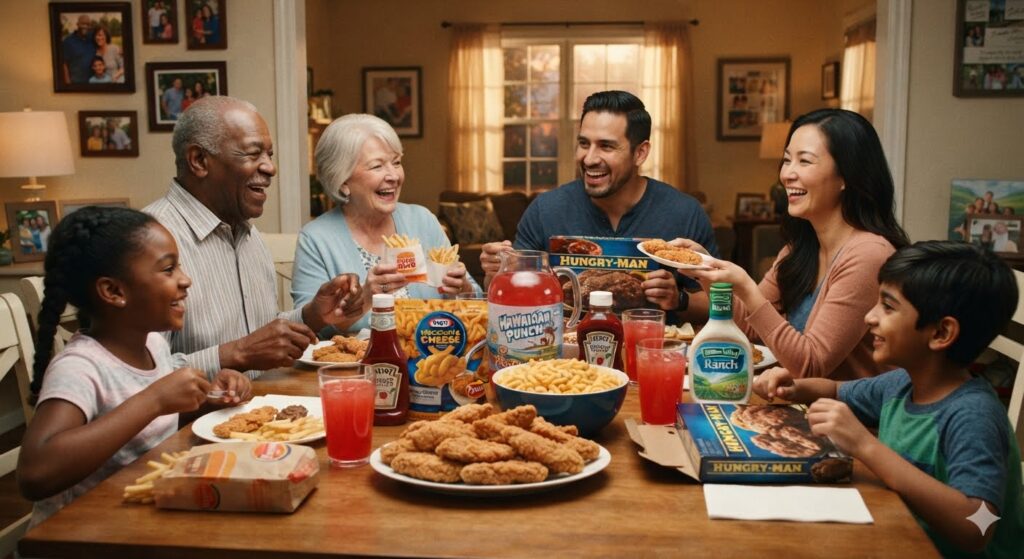
Deacons, parents, and Bishops, wake up! Ultra-processed food companies engineer cheap, addictive products using synthetic additives, cheap fats, and excess sugars.
.
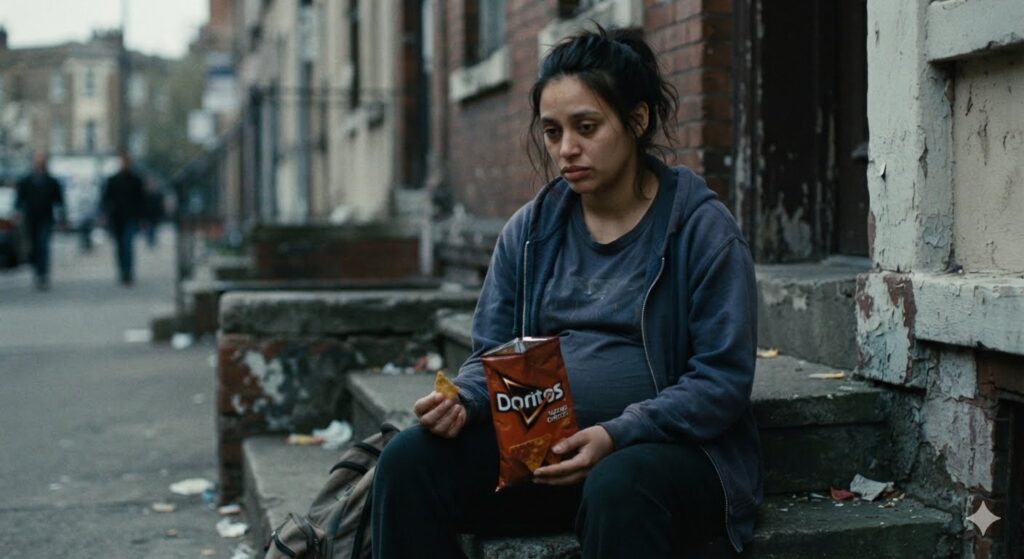
Major food conglomerates heavily market these low-quality meals to vulnerable people, driving global health crises like obesity and diabetes among the economically disadvantaged while prioritizing corporate profit over public well-being.
.
The Sickening Problem with Processed Foods:
.
Foods lose natural nutrients during heavy factory processing. Companies add high amounts of salt, sugar, and fat to boost flavor. Artificial colors and chemical preservatives extend shelf life. These items lack fiber and cause rapid blood sugar spikes. Aggressive marketing targets children and low-income communities.
.
Corporate Strategies and Marketing:
.
Food giants invest heavily in sensory allure, or “bliss points” with appealing models and exciting music to attract the ignorant. Aggressive marketing targets children and low-income communities.
.
Processed Food Giants Involved:
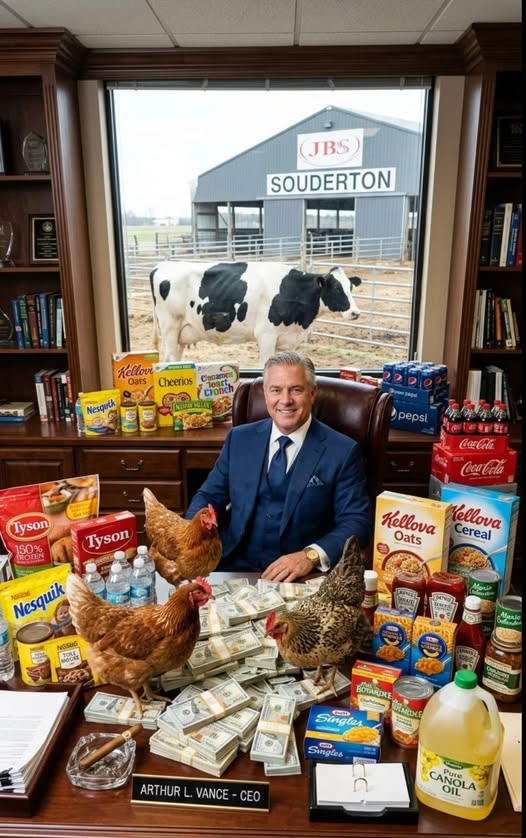
The Coca-Cola Company, PepsiCo, Nestlé, General Mills, Kraft, Heinz, Conagra Brands, Tyson Foods, Keurig, Dr Pepper, Hormel Foods, JBS USA, Mars, Mondelez, International Kellanova (formerly Kellogg’s), McDonald’s, Burger King, Wendy’s, Duncan Donuts, KFC, Domino’s Pizza (all fast-food franchises).
.
Unless one is starving, there is no reason to eat their garbage. God gave us plants and gave us
the permission to eat meat from animals for our nourishment, instead.
.
“Behold, I have given you every herb bearing seed… and every tree, in the which is the fruit of a tree yielding seed; to you it shall be for meat” (Genesis 1:29).
.
The early church, persecuted and its members being impoverished, had no relish for excess but desired Christ. The words of the martyr are clear:
.
“I have no taste for corruptible food nor for the pleasures of this life. I desire the bread of God, which is the flesh of Jesus Christ, who was of the seed of David; and for drink I desire his blood, which is love incorruptible” (Letter to the Romans; Saint Ignatius of Antioch; Chapter 7; Sec. 3; A.D. 110).
.
“Bishop Mike’s Slaughterhouse Story“:
.
Until its closure late in 2026 the famous JBS-Souderton plant slaughtered many truckloads of a thousand cows and steer per day. The animals were walked in a line and one after the other were shot in the brain with a retractable metal cylinder.
.
Each corpse was carted away, skinned, gutted, cut, and sold to fast-food companies and processors.
.
Sometimes the trucks carrying the bones and marrow would tip over and leave fallen waste on the public roads.
.
The plant was shut down numerous times because of rat infestation. The workers (the majority being ethnic minorities and migrants) were under-paid hostile and angry.
.
Eyewitness to the intake-hauling, the slaughtering, and the processing was Bishop Mike DellaVecchia. He briefly worked at JBS Souderton in 2018 as a security officer. He left after one day.
.
Every Big Mac and Whopper that resulted, if understood solely by its large profits slung to corporate executives, was not slaughtered by the permission of God via the verse, below, but was both to serve the gluttony of a pleasure-seeking public and to line the pockets of the corporate beneficiaries.
.
“Every moving thing that liveth shall be meat for you; even as the green herb have I given you all things” (Genesis 9:3).
.
Lobbying Groups Fight Against Strict Nutritional Labeling Laws:
.
There is a dependence by vulnerable people on cheap processed and fast food that would appear to be part of the consumer religion of America. Pastors should be hard-pressed to preach resistance against participation in it, aiming their denunciation of the intrigue masters rather than apportioning their silence that equates to complicity.
.
In fact, major processed food corporations advocate for one another through dedicated coalitions and trade associations—such as the newly formed Americans for Ingredient Transparency (AFIT) and the long-standing Consumer Brands Association (CBA)—to lobby against strict state and federal nutritional labeling laws, warning labels, and additive bans. They want no interference with our ease at speedily buying bulk quantities of their junk.
.
Common Cases of High-Profit Cheap Ingredients:
.
Cheap ingredients allow massive profit margins for big brands. Big brands use very cheap ingredients to make popular products and sell them for a high price. This creates a huge profit margin and bilks the poor and middle class.
.
Bottled Water: Water costs almost nothing to pump, clean, and bottle, but companies sell it for a huge markup compared to tap water.
.
Fountain Soda: Syrup and carbonated water cost restaurants only a few cents per cup, yet they sell large sodas for several dollars.
.
Breakfast Cereal: Processed corn, wheat, and sugar cost very little in bulk, but bright boxes sell at high retail prices.
.
Bagged Chips: Corn, hydrogenated oil, and salt are very cheap, but branded bags sell with a massive profit for snack companies. The packages seal blown air into the bags to make it appear that more quantity is inside them.
.
Gummy Candy: Sugar, corn syrup, and gelatin cost pennies to mix and shape into small pieces sold by weight.
.
Fast Food Coffee: Hot water and cheap bulk coffee beans cost a small fraction of what coffee shops charge customers.
.
Boxed Macaroni and Cheese: Dried pasta and powdered cheese cost almost nothing to make, while store boxes yield a large profit.
.
Health and Social Impacts:
.
Diet-related chronic illnesses—driven by a global shift toward ultra-processed foods, refined sugars, and unhealthy fats—lead to severe physical decline, higher healthcare costs, and deepened social inequalities worldwide.
.
Cardiovascular Disease: High sodium and trans-fat diets cause hypertension, leading to fatal heart attacks and strokes globally.
.
Type 2 Diabetes: Diets heavy in processed meats and sugary drinks impair insulin resistance, causing organ damage, blindness, and amputations.
.
Obesity and Metabolic Decline: Calorie-dense, nutrient-poor foods trigger systemic inflammation, fatty liver disease, and joint deterioration.
.
Certain Cancers: Low intake of fiber, fruits, and vegetables combined with high red meat consumption raise colorectal and digestive tract cancer rates.
.
Social Impacts on Lower- and Middle-Economic Classes of Food Unfairness:
.
Healthcare Strain: Surging patient numbers exhaust public health systems and drive up national medical expenditures.
.
Economic Inequality: Low-income communities face higher disease burdens because cheap, processed calories are more accessible than fresh food.
.
Lost Productivity: Chronic fatigue and early disability reduce workforce participation and lower household incomes.
.
Caregiver Burden: Families must spend significant time and money caring for sick relatives, worsening generational poverty cycles.
.
Who Suffers the Most: Communities with limited fresh food access suffer the most through severe health disparities, financial strains, and systemic disadvantages. Lacking nearby full-service supermarkets, these neighborhoods face compounded physical and economic hardships.
.
Higher Rates of Food-Related Chronic Illness in Lower and Middle Classes:
.
Metabolic diseases: Residents face higher rates of obesity, type 2 diabetes, heart disease, and high blood pressure because affordable fresh produce is absent.
.
Reliance on Processed Foods: People must buy calorie-dense, nutrient-poor foods from corner stores or fast-food joints, leading to long-term physical decline.
.
Economic and Time Burdens Affect Lower and Middle Classes:
.
Transportation costs: Families spend extra money and time riding multiple buses or driving long distances just to buy basic groceries.
.
Inflated local prices: Small neighborhood markets often charge more for lower-quality items because they lack large-scale supply chain efficiencies.
.
Mental and Social Strain of Nutrition Availability on Lower and Middle Classes:
.
Chronic stress: The daily struggle to find nourishing food creates mental exhaustion and anxiety for parents and caregivers.
.
Reduced community well-being: A lack of basic neighborhood investments deepens cycles of poverty and community isolation.
.
Healthcare systems face extreme financial strain from rising diseases.
.
Public trust in food safety standards continues to decline.
.
Salvation does not depend on avoiding fast/processed foods but it is nonetheless societally harmful to model the propagation of evil by feeding trash to the vulnerable and innocent:
.
“In all things shewing thyself a pattern of good works: in doctrine shewing uncorruptness, gravity, sincerity” (Titus 2:7).
.
However, we must remember that even though we are correct in advocating for wellness as such, the far-greater poisoning occurs by the verbal injuries we commit:
.
“Not that which goeth into the mouth defileth a man; but that which cometh out of the mouth, this defileth a man” (Matthew 15:11).
.
Therefore, Be Nice About This Material:
.
It is a touchy, sensitive subject. Handle your preaching by concentrating on the wickedness of the fiduciary stakeholders of bad-food selling, instead of allowing shame and degradation to befall the innocent and vulnerable, many of whom can neither afford nor reach sellers of good food. Please click NEXT.